Styles
Presets
Spin the letter wheel and you get one letter from the alphabet, picked fairly while everyone watches. The wheel loads with all 26 letters from A to Z, so it is ready for word games, classroom practice, and quick tie-breaks. It is free, it runs in your browser, and there is no sign-up.
What Is a Letter Wheel?
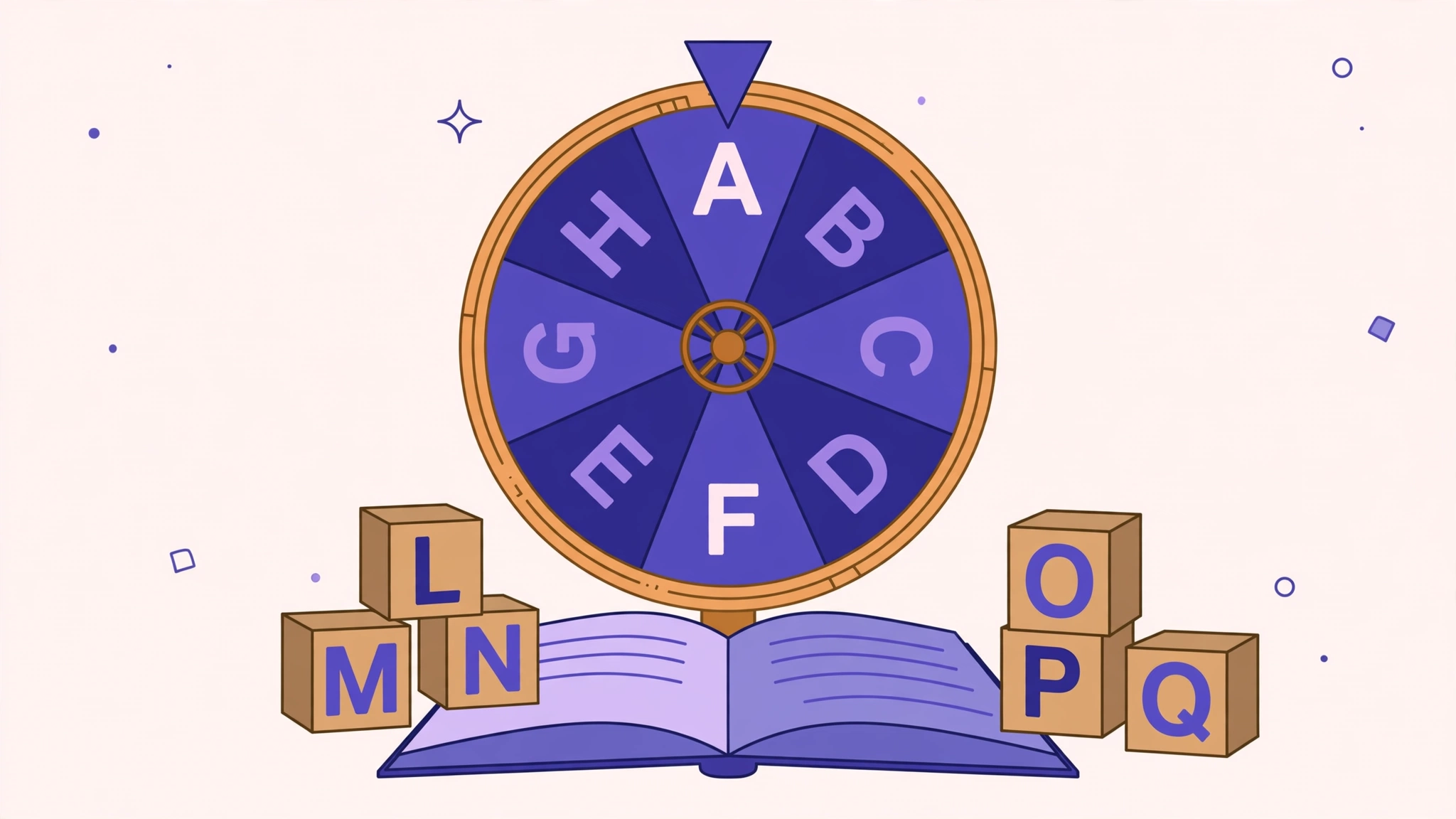
A letter wheel is a spinning wheel divided into equal slices, with one letter of the alphabet on each slice, and the letter that stops under the pointer is the result. This page loads the full alphabet, so a single spin gives you a random letter for a game round, a lesson, or a creative prompt in a few seconds.
People reach for a random letter wheel because choosing a letter yourself is never quite neutral. The wheel breaks that habit. It also loads fast, works on a phone or a classroom screen, and lets you trim the alphabet down to only the letters your activity actually needs.
How to Pick a Random Letter
Using the letter picker wheel takes less than a minute. Keep the full alphabet for open games, or delete the letters that do not fit before you start. Here is the simple flow most players and teachers follow, from the first spin to the final round of the game.
- Check the list above the wheel and remove any letters your game has already used.
- Press the spin button, or flick the wheel with your mouse or finger, and let it slow down on its own.
- Read out the letter sitting under the pointer at the top of the wheel. That letter starts your round.
- Play the round with that letter, then spin again for the next one when you are ready.
- Delete a letter after it wins if your game needs each letter to appear only once.
Where a Letter Wheel Earns Its Place
Word games and party rounds. Scattergories style games, hangman, and drawing games all start with one letter, and an argument about that letter can stall the whole table. Nobody picked it, nobody can dispute it, and the round starts right away with the letter the pointer chose. Serious players even think about letter frequency, since common letters open up far more word choices than rare ones.
Classroom phonics and alphabet practice. Teachers spin for a letter, then ask the class to name an animal, a food, or an object that begins with it, which turns plain review into a game students want to join. Vowels only lists suit early phonics work, while the full alphabet suits older classes. The fullscreen view keeps the chosen letter big and clear from the back row.
Word game tie-breaks and creative prompts. Close games often end level, and a random letter settles the rematch fairly. Spin to decide which letter the deciding round uses, and both sides accept the result because neither side chose it. One letter becomes the rule for a list of names, titles, or story ideas, and the odd limit often produces better ideas than a blank page.
Why Every Letter Gets the Same Chance
Fairness on this wheel is simple geometry. Each letter sits on a slice of exactly the same size, so the pointer is just as likely to stop on Q as on A. There is no weighting hidden in the list, and letters that appear early in the alphabet get no quiet advantage.
Earlier spins also leave the odds untouched. A letter that won three rounds ago has the same chance on the next spin as every other letter, and a letter that never comes up is not due for a turn. Your list lives only in your browser, nothing is uploaded, and the results history keeps a plain record of the letters that have already been played. That record makes the letter wheel easy to check mid game, since anyone can see what has already come up.
Ideas That Make Letter Games Better
Trim the list before young children play, and most groups have more fun. Letters like Q, X, and Z are tough starting points for a six year old, so remove them and keep the game moving. A round that starts with X forces everyone to think harder and usually gets the biggest laugh of the night.
You can spin twice and play with the pair, asking for a word that starts with one letter and ends with the other. Changing the shape of the list between rounds keeps a simple game feeling new, and it takes only a few seconds each time.
Frequently Asked Questions
Can I spin with only part of the alphabet?
Yes, and most teachers and game hosts do exactly that. Delete the letters your activity does not need and spin the letter wheel with whatever remains on the list. A vowels only list suits phonics practice, a list without the hardest letters suits young children, and the full 26 letters stay one reset away whenever you want the complete set back.
Can the same letter come up twice in a row?
It can, because every spin starts fresh and each letter keeps the same chance each time. Two spins landing on the same letter feels surprising, but it is a normal part of random results and it happens with dice and coin flips too. If your game needs each letter used once only, remove the winning letter after every round and the list will shrink as you play. A shrinking letter wheel keeps long games tidy, because played letters never sneak back in.
Can I use letters from other alphabets?
Yes. The list accepts any characters you type, one entry per line, so you can build a wheel for another language or a set of sounds your class is learning. Accented letters, characters from other scripts, and even short syllables all work the same way. Each entry gets an equal slice, and the spin treats every entry exactly like a letter from the standard alphabet.
More Wheels to Try
Go back to the main wheel for a fully custom list, draw numbers with the number wheel when your game needs digits, or pick between names and options with the picker wheel. All three use the same fair spin and the same simple list editing.
The Letter Picker is one of Wheel Spinner’s free wheels, made for word games, classroom activities, and quick random letters.